Real-Time Ray Tracing is a feature offered by Nvidia’s RTX line of graphics cards that promised to bring more realistic lighting with minimal performance impact to video games. First, let us define raytracing, ray tracing is a video rendering technique used to simulate the effects of light on objects within a frame. This is done by tracing the path a beam of light would take from its source, including how it would interact with the environment, this includes reflections, refraction, diffusion, etc.
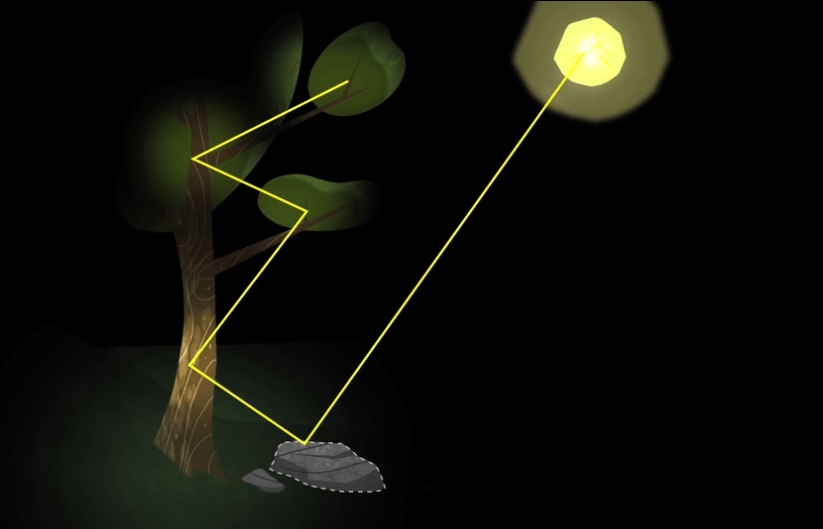
Ray tracing has been used as a rendering technique in animation for years, especially in film. Some high-profile examples include, “Monsters University (2013)” in which, certain frames took up to 29 hours to render or “Big Hero 6 (2014)” which used a 55,000-core supercomputer to create the animation. Obviously, the level of ray tracing used in movies requires way more processing power than would viable for gaming where frames need to rendered and updated at least thirty times a second. This is because the method of ray tracing used in films sees an immense magnitude of rays from each light source and multiple bounces for each ray.
To allow for ray tracing to update at a frame rate viable for gaming, Nvidia employed a variety of techniques to limit the number of rays that must be traced. Contrary to traditional ray-tracing techniques, that start the ray at the light source, RTX begins its rays from the players ‘Camera’ before tracing them back to the light source.
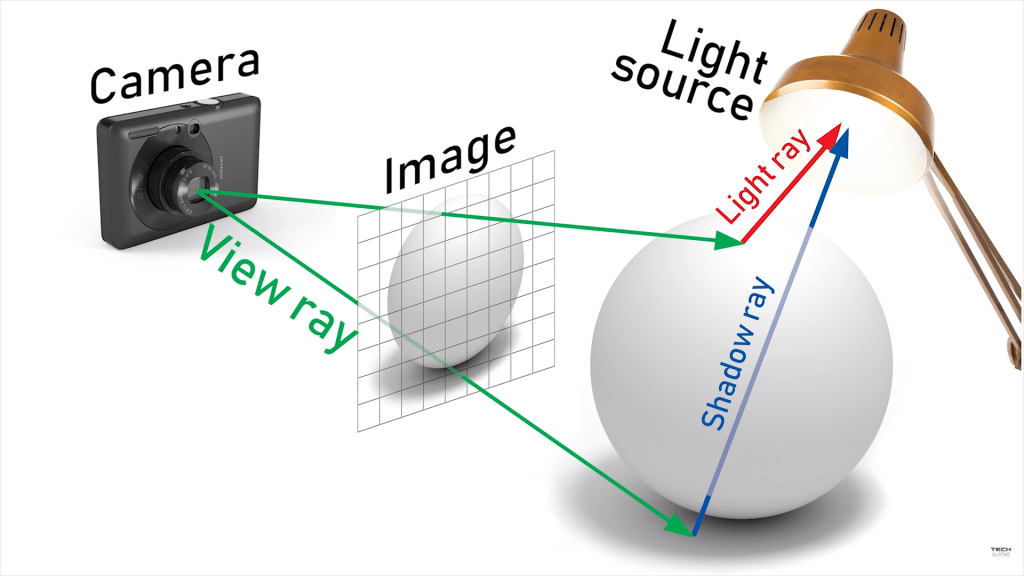
This allows developers to determine which objects benefit most from the effects of ray-tracing, and then focus the sampling to the pixels where these objects are displayed.
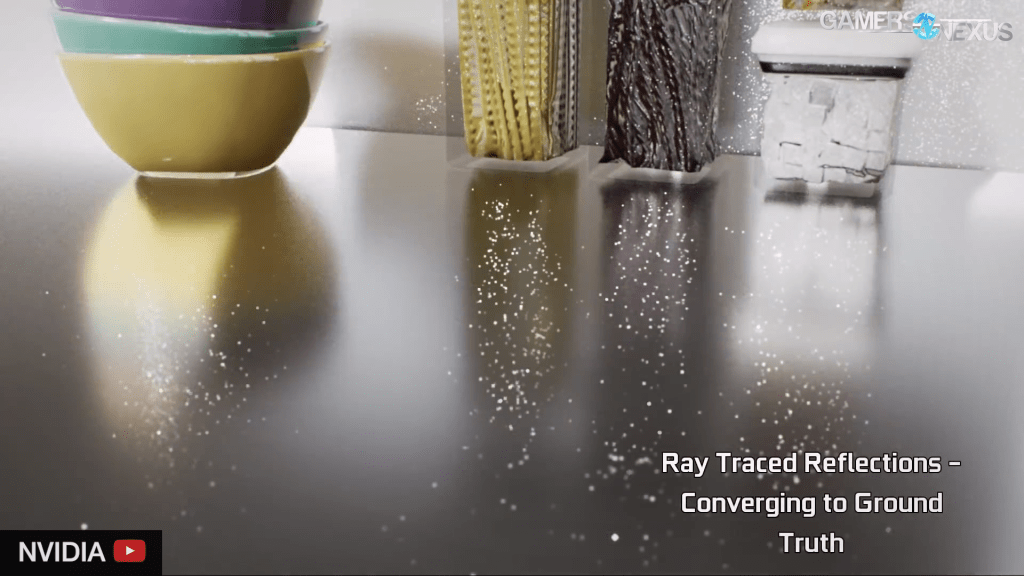
AI is then used to de-noise the images, filling in the gaps where rays have not been traced to simulate how light should be behaving at all parts of the screen. This is not as perfect as film scale ray tracing but claims to do a more realistic job than other video rendering techniques using shaders.
I own an RTX card (RTX 2070) and as such will run some benchmarking tests on “Call of Duty: Modern Warfare (2019)” in order to compare image quality and framerates, to present my opinion on the value of RTX.
Ultimately, in my opinion, shaders mimic the properties of light well enough that the difference is basically indistinguishable. Honestly, when getting the following images to showcase the game with and without RTX, I mixed up which image was which and had to go take them again. That is how similar they are. (1st image is without ray tracing; 2nd image is with ray tracing)
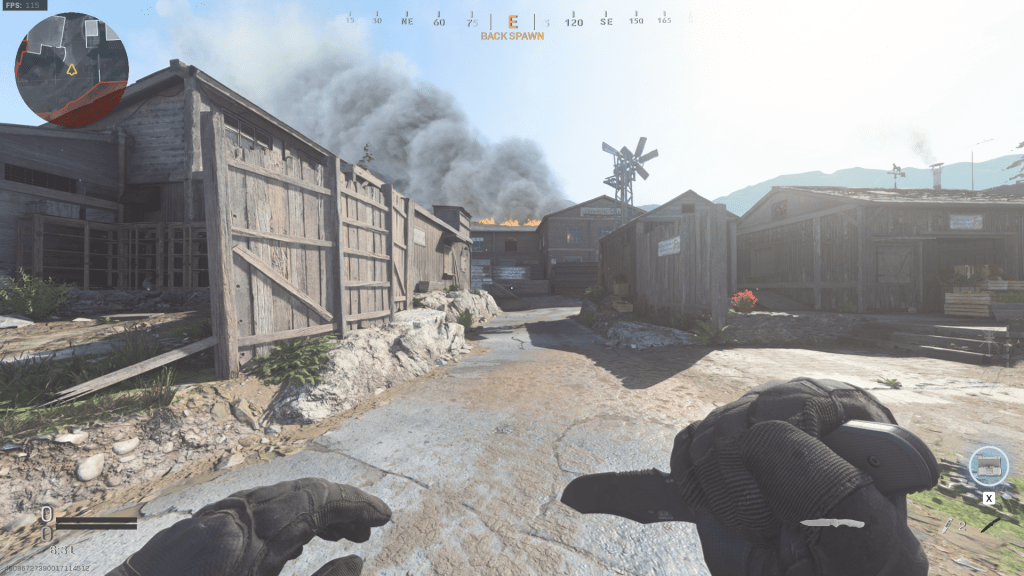

However, enabling ray tracing also had no impact on framerates. This is because ray tracing is handled by the RTX 2070’s 36 raytracing acceleration cores which, without ray tracing enabled do nothing anyway. As such, if you own an RTX card you may as well enable ray tracing for the fringe scenarios where it does make an impact, but at the current moment in time, paying the premium to upgrade to an RTX card is not worth it.
 ily's Blog